
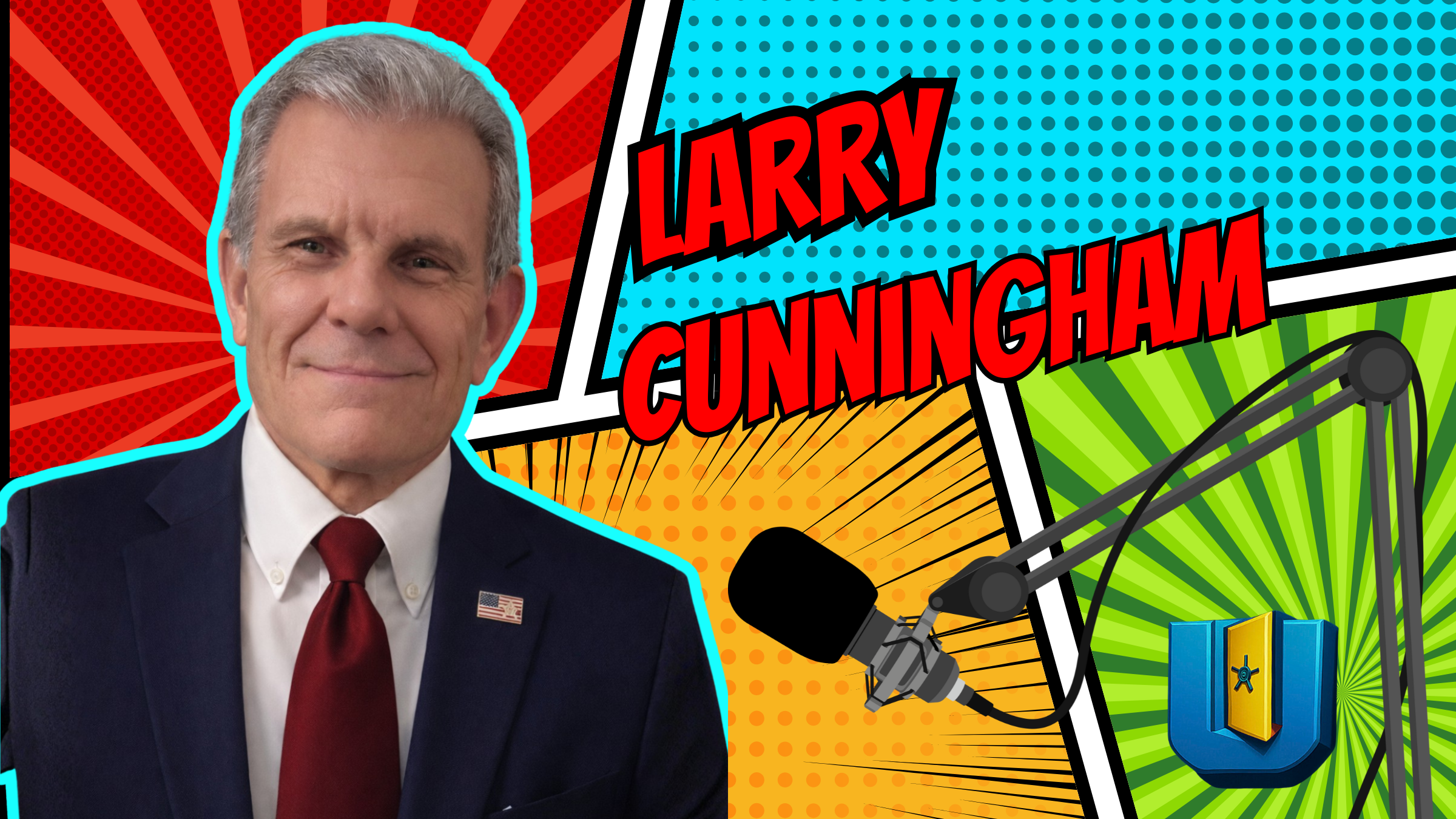
Most of us hope we’ll never face a real crisis. But some people spend their entire careers preparing for them, thinking ahead, staying calm, and helping everyone else do the same when the pressure hits.
J. Lawrence Cunningham is one of those people. With over four decades in national security and crisis management, this retired Secret Service leader has protected presidents, managed major investigations, and helped design training programs that still shape modern law enforcement today.
What makes Cunningham’s story fascinating isn’t just the high-stakes situations he’s navigated, it’s how he transformed from a pre-med student who wanted to be a doctor into someone who literally ran with presidents and trained the people who protect the rest of us.
From Medicine to Protection: An Unexpected Path
Growing up in Maryland as the oldest of seven children, Cunningham never imagined he’d end up protecting world leaders. His father was military, and the family spent four influential years in Oberammergau, Germany, giving him a cross-cultural perspective that would later prove invaluable.
“My initial goal was to become a doctor,” Cunningham recalls. “Many of my cousins and relatives are in that field, but for a variety of reasons, I didn’t really pursue it maybe with the same energy I should have.”
Sometimes life’s detours become its greatest gifts. When funding for his clinical psychology program was cut, Cunningham found himself exploring other options. His father-in-law, who worked in the Secret Service communications branch, suggested he consider the service. What started as a backup plan slowly developed into “a career that I loved.”

The Moment Everything Changed
For Cunningham, the turning point came on March 30, 1981, the day President Reagan was shot. “That attempt really kind of galvanized where I was at the time,” he explains.
At that point, Cunningham had spent five years in the field learning investigative work, gathering evidence, presenting cases for prosecution, handling everything from threats to the president to counterfeit cases. But the Reagan assassination attempt sparked something deeper.
“That was the epiphany where I said, ‘You know, I’m really in the right place,'” Cunningham reflects. The agency asked him to develop fitness and stress management programs, a perfect marriage of his pre-med background with his Secret Service experience.
This wasn’t just about physical training. “A lot of the folks at that point didn’t have a stress management, a very well-defined fitness program, or a post-shooting trauma program,” he notes. The programs Cunningham created filled critical gaps that are still relevant today.
The Mind-Body Connection in High-Stress Work
Cunningham’s approach to fitness goes far beyond looking good or meeting basic requirements. Having completed over 50 marathons and several Ironman competitions, he understands something crucial: “Mind and body are one.”
When asked about his running philosophy, Cunningham jokes, “Psychiatrists are too expensive. So running shoes are a little cheaper.” But beneath the humor lies a serious point about managing stress and maintaining mental clarity in high-pressure situations.
“I don’t think there’s any replacement for keeping yourself fit,” he emphasizes. “That has spillover to the mentally fit part.”
This philosophy proved essential in his Secret Service work. Protection isn’t about being the biggest or strongest person in the room, it’s about strategy, preparation, and mental clarity under pressure.

Lessons for the Next Generation
When it comes to young people struggling to find their purpose, Cunningham’s advice is both practical and encouraging. He acknowledges that “youth at any generation is difficult, whether it’s the 1900s, 1930s, ’50s, or currently.”
His guidance is straightforward:
Believe in yourself. “You’re valuable,” he emphasizes. “Don’t allow competing distractions, frankly social media, imaginary criteria that validate people… those things unfortunately can be addicting and they can cause you to kind of change your self-perception.”
Talk to your mentors. This might be parents, grandparents, or people already working in fields that interest you. “Find what your interests are and talk to those people that have been down that path.”
Don’t get too locked in. “Look at lots of things that are of interest to you and when you find them, apply yourself. And it may be as you get older that’s not what you want. That’s okay. The process of discovery is doing just that.”
Most importantly: “Whatever you do, don’t give up on yourself.”
A Message for Veterans and First Responders
Cunningham has a special message for military veterans and law enforcement who might feel discouraged by current events: “Your mission is critical. And the louder the voices, the louder the dissent, that should just galvanize your commitment.”
He acknowledges the challenges facing these communities, defunding movements, public criticism, and general negativity. His response is characteristically direct: “I have to apologize to you and honor whomever is listening how valuable your service is… we need you now more than ever.”
His advice centers on self-care: “Please take care of yourself physically and mentally… try to avoid those easy defaults like drinking, for example, or eating, overeating and that kind of thing. Those can provide temporary comfort, but I would offer, please take care of yourself physically and mentally.”

The Public as a Force Multiplier
One of Cunningham’s most important insights involves how ordinary citizens can contribute to safety and security. He calls the public “an incredible force multiplier” because “they see things that bad guys do or would-be terrorists do well before police do.”
This concept gained new urgency after 9/11, when the national security approach shifted to: “prevent, protect, mitigate, respond, recover.” Notice that prevention comes first.
Cunningham points to the 2024 assassination attempt on President Trump as an example. The shooter had used a drone two days before the event to conduct surveillance, planning that happened “before the police were there. But you’ll notice in some of the video, the public were noticing things before the police were.”
The key is understanding what “see something, say something” really means. It’s about recognizing when behavior “exceeds the baseline”, when someone or something just doesn’t fit the normal pattern for that environment.
“The bad guys that I’ve looked at, many of the attacks I’ve looked at, they decide and look at these target selections and figure out which one’s most vulnerable, what time of day. That is the moment when the public can really be helpful.”
The Power of Basics Over Technology
Despite decades of technological advancement, Cunningham believes in “The Enduring Value of the Old School in the Face of Modern Technology”, the working title of his upcoming book about protecting VIPs.
“Modern technology is wonderful. AI is wonderful. But you can’t get rid of the basic truths,” he explains. Many attacks “didn’t really have to happen. Some of the basics were overlooked.”
This philosophy extends beyond security work. Whether you’re facing a personal crisis, leading a team, or simply trying to stay resilient in challenging times, the fundamentals matter: physical fitness, mental health, preparation, clear thinking, and relying on trusted relationships.

A Moment of Recognition
Perhaps the most humanizing story Cunningham shares involves President Reagan personally honoring his commitment to fitness. During the 1980 campaign, there was a friendly wager about whether anyone could run from coastal highway 101 up to Reagan’s ranch in under an hour.
Cunningham made the challenging run successfully. Months later, at the Blair House transition office, Reagan called him over and presented him with a gold medal the president had won in an equestrian event.
“I just said, ‘Well, we just want to make sure that you know that we are trying to be fit,'” Cunningham recalls. It was a simple gesture that spoke to the importance of leading by example and maintaining standards even in small things.
Staying Ready for What Comes Next
Cunningham’s story offers practical wisdom for anyone facing uncertainty or pressure. Whether you’re a young person searching for purpose, a veteran dealing with challenging times, or simply someone who wants to be better prepared for life’s unexpected moments, his approach is clear:
Take care of your physical and mental health. Build relationships with mentors and trusted advisors. Stay alert to your environment. Don’t give up on yourself. Focus on the basics even as technology advances.
Most importantly, remember that preparation isn’t about expecting the worst, it’s about being ready to help others when they need it most.
“Believe in yourself despite the, uh, frankly the far left that’s trying to erode your mission. Believe in yourself,” Cunningham emphasizes.
In a world that often feels chaotic and unpredictable, that might be the most valuable lesson of all: the quiet confidence that comes from being truly prepared.