
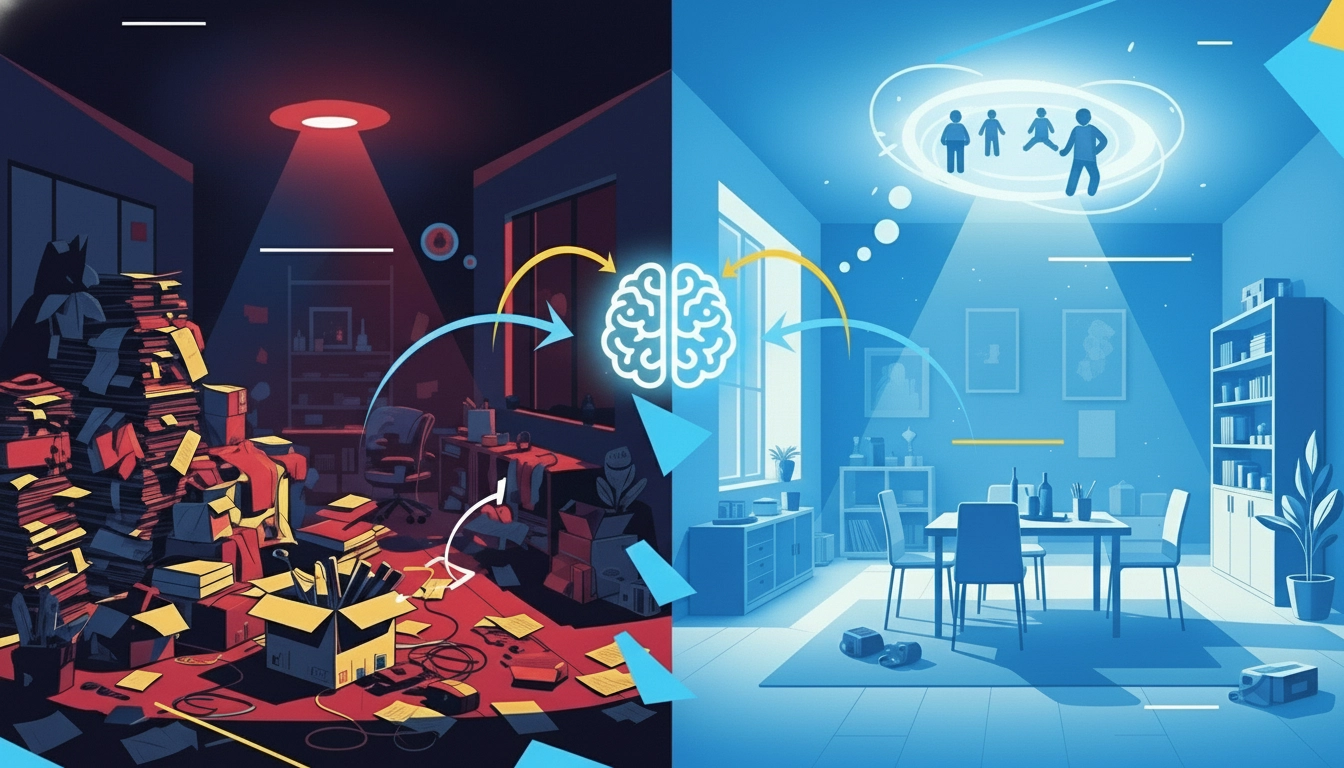
Walk into someone’s home, and within minutes you’ll know more about their mental state than they might realize they’re revealing. That pile of laundry that’s been “temporarily” on the chair for three weeks? The kitchen counter buried under mail, coffee cups, and random objects? Or maybe the opposite: a space so pristine it feels almost sterile?
Your living environment isn’t just a backdrop to your life: it’s a real-time reflection of what’s happening in your mind. And here’s the thing that most people don’t realize: it works both ways. Your space affects your mental health just as much as your mental health affects your space.
The Science Behind Your Surroundings
Neuroscience research reveals something fascinating about how our brains process clutter. When you’re surrounded by disorganization, your brain has to work overtime just to filter through the visual noise. Using fMRI imaging, researchers found that clearing clutter from living and work spaces resulted in better focus, improved information processing, and increased productivity.
But it goes deeper than just distraction. A groundbreaking 2009 study measured cortisol levels in mothers living in cluttered homes versus organized ones. The women in cluttered environments showed significantly elevated stress hormones throughout the day. Think about that: just being in a messy space was literally flooding their bodies with stress chemicals.

This isn’t about being a “neat freak” or having impossibly high standards. Your nervous system is constantly scanning your environment for threats and safety cues. Chronic clutter creates a low-grade fight-or-flight response that taxes your body’s survival resources, affecting everything from your immune system to your risk of heart disease.
What Different Spaces Reveal About Mental Health
The Overwhelmed Mind: Clutter and Chaos
When life feels out of control, our spaces often reflect that internal chaos. Clutter accumulates not because someone is lazy or careless, but because their mental bandwidth is maxed out. Every item sitting out represents a decision that hasn’t been made, a task that hasn’t been completed, or energy that simply isn’t available.
Depression and anxiety don’t just make you feel bad: they make basic maintenance feel impossible. That’s why you’ll sometimes see social media posts about “depression rooms” or “doom piles”: physical manifestations of mental exhaustion. The laundry isn’t getting folded because folding laundry requires executive function that’s being used just to get through the day.
The Hypervigilant Mind: Everything in Its Place
On the flip side, spaces that feel rigid or compulsively organized can signal a different kind of mental state. Some people use extreme organization as a way to create control when everything else feels unpredictable. While having systems and structure is healthy, if maintaining order becomes anxiety-inducing or all-consuming, it might be worth exploring what’s driving that need for control.
The Hoarding Pattern: When Letting Go Feels Dangerous
Hoarding represents an extreme end of the spectrum, where the inability to discard items creates unsafe living conditions. This isn’t about being messy: it’s often rooted in trauma, loss, or deep fear about scarcity. The items become emotional shields, and the thought of letting them go triggers genuine panic.

The Bidirectional Cycle: How Space and Mind Feed Each Other
Here’s where it gets really interesting: and hopeful. Because the relationship between your environment and mental health works both ways, you can intervene from either direction.
When Mental Health Creates Clutter
ADHD makes it incredibly difficult to maintain organization, not from lack of caring but from genuine differences in brain function. Depression saps the energy needed for basic maintenance. Anxiety can make decision-making about what to keep or toss feel paralyzing.
Understanding this removes shame from the equation. If your space is chaotic and your mental health is struggling, you’re not failing: you’re human.
When Clutter Reinforces Mental Struggle
But here’s the catch: once clutter accumulates, it feeds back into the mental health challenges that created it. Visual chaos makes it harder to think clearly. Constant reminders of unfinished tasks increase stress. Feeling embarrassed about your space leads to social isolation, which worsens depression and anxiety.
Research from 2016 found that people in cluttered environments were actually less able to correctly read emotional expressions on others’ faces. Your environment literally affects your ability to connect with people.
Breaking the Cycle: Small Shifts, Big Impact
The good news? Small changes in your environment can create surprisingly big shifts in how you feel. You don’t need a complete overhaul: you need strategic, sustainable approaches that work with your brain, not against it.
Start Ridiculously Small
Instead of “clean the whole house,” try “clear one small surface.” Maybe it’s just the space next to your bed, or one corner of the kitchen counter. Success builds momentum, and momentum builds confidence.
The One-Thing Rule
Every time you leave a room, take one thing that doesn’t belong with you. Not five things. One. This prevents accumulation without feeling overwhelming.

Create Landing Zones
Designate specific spots for items that tend to wander: keys, mail, charging cables. When everything has a home, putting things away becomes automatic rather than a decision that drains mental energy.
15-Minute Reset Ritual
Set a timer for 15 minutes each evening and do a quick reset of your main living space. Not deep cleaning: just returning things to their homes and dealing with the day’s accumulation. This prevents the buildup that leads to overwhelming weekends spent digging out.
Practice Gentle Decluttering
When you’re ready, start letting go of items using the “spark joy” principle, but make it trauma-informed. If letting go feels scary, start with obviously broken or expired items. You’re retraining your nervous system that releasing things can feel safe.
Your Space as Self-Care
Viewing your environment as an extension of mental healthcare reframes everything. A tidy space isn’t about Instagram-worthy aesthetics: it’s about reducing cognitive load and creating a foundation for emotional well-being.
This doesn’t mean your home needs to look like a magazine. It means creating an environment that supports rather than sabotages your mental energy. Maybe that’s clearing the path from bed to bathroom. Maybe it’s having a clean space to eat meals. Maybe it’s ensuring your bedroom feels restful rather than chaotic.

Remember, everyone’s baseline is different. Someone with ADHD might never have a perfectly organized home, and that’s completely normal. Someone dealing with chronic illness might need to lower their standards during flares. The goal isn’t perfection: it’s awareness and small, sustainable improvements that support your wellbeing.
The Bigger Picture: Understanding Without Judgment
When you understand the science behind space and mental health, it becomes easier to approach both with compassion: for yourself and others. That friend whose house always looks chaotic isn’t lazy or careless. They might be struggling in ways they haven’t shared. Similarly, if your own space feels out of control, it’s data about your mental state, not a moral failing.
Your environment is constantly communicating with your nervous system, either supporting calm and focus or contributing to stress and overwhelm. By paying attention to these signals and making small, strategic changes, you can create an upward spiral where your space supports your mental health, which makes it easier to maintain your space.
The relationship between your mind and your environment is one of the most accessible tools you have for improving your daily experience. You don’t need therapy or medication to start (though both can be incredibly helpful). You just need to look around and ask: “Is this space supporting the person I want to be?”
How has your space been making you feel lately? What shifts: however small: might support your mental wellbeing? Head over to our private forum to share your thoughts, photos, or questions about creating environments that actually work for your life. Sometimes the smallest changes create the biggest transformations.