
Your nervous system is running the show behind the scenes, and most of us have no idea how to work with it instead of against it. Enter the vagus nerve: your body’s built-in reset button that can shift you from fight-or-flight chaos to calm, regulated thinking in minutes.
If you’re tired of feeling wired, overwhelmed, or like your stress response has hijacked your life, this isn’t another wellness trend. It’s neuroscience you can actually use.
What Exactly Is the Vagus Nerve?
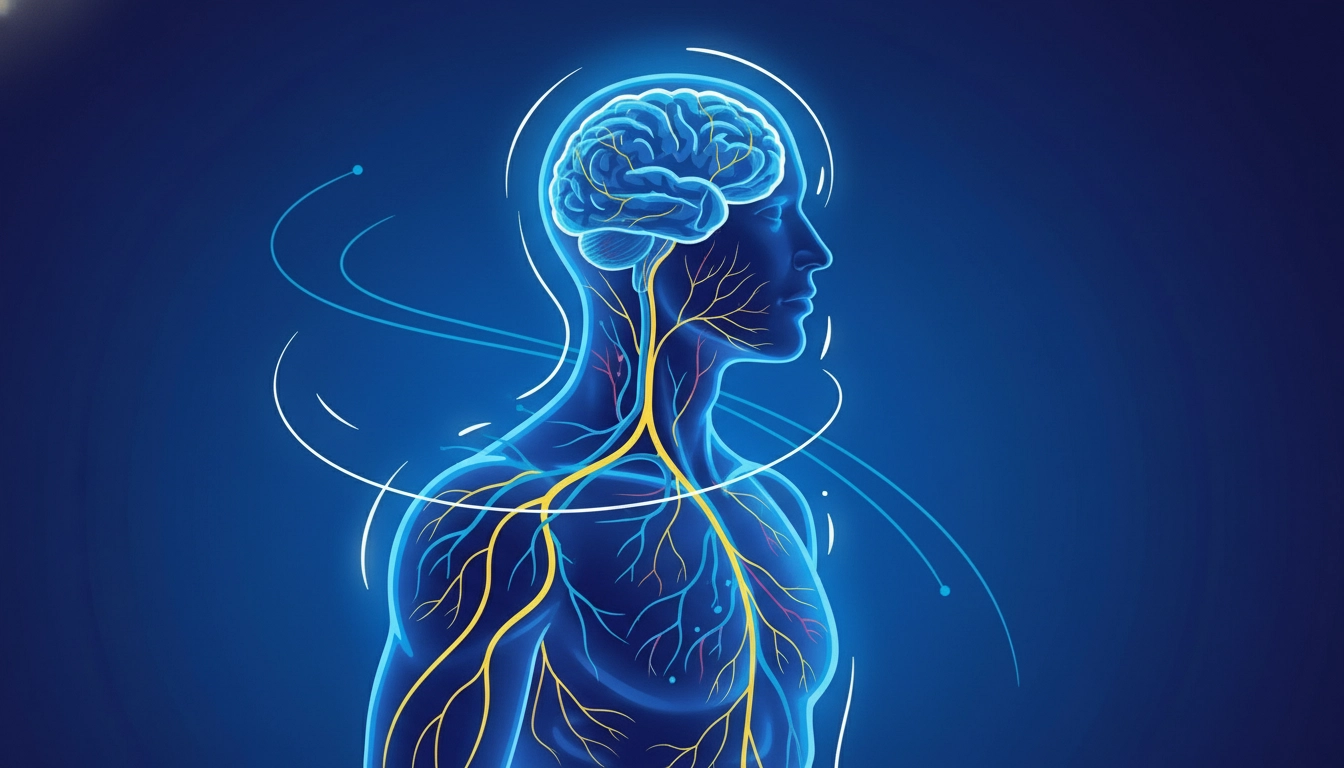
Think of the vagus nerve as your body’s primary communication highway between your brain and your major organs. It’s the longest cranial nerve, wandering from your brainstem down through your neck, chest, and abdomen: connecting to your heart, lungs, and digestive system.
More importantly, it’s the main driver of your parasympathetic nervous system: the “rest and digest” mode that counteracts your “fight or flight” response. When your vagus nerve is functioning well, you can handle stress without getting stuck in it. You think clearer, sleep better, and don’t spiral over every email or deadline.
The problem? Modern life keeps most of us locked in sympathetic overdrive. Constant notifications, packed schedules, and chronic stress mean our vagus nerve gets weak and underused. It’s like having a muscle that’s forgotten how to work properly.
Why This Matters More Than You Think
Here’s what happens when your vagus nerve isn’t doing its job: You stay stuck in stress mode even when the actual stressor is gone. Your heart rate stays elevated. Your thinking gets foggy. Small problems feel massive. You can’t seem to “turn off” at the end of the day.
Research shows that people with higher vagal tone: meaning a more responsive vagus nerve: have better emotional regulation, stronger immune function, and greater resilience to stress. They recover faster from setbacks, both mentally and physically.
The good news? You can strengthen your vagal tone with simple, specific techniques. And unlike meditation or therapy, these work in minutes, not months.

The 3-Minute Nervous System Reset
These techniques aren’t just feel-good exercises: they’re based on how your nervous system actually works. Each one sends specific signals to your brain that it’s safe to downshift from high alert to calm awareness.
Cold Water Face Immersion (30 seconds)
Splash cold water directly on your face, focusing on the area around your eyes and upper cheeks, or use an ice roller for 30 seconds. This triggers what’s called the “dive response”: an evolutionary mechanism that immediately slows your heart rate and redirects blood flow to your brain.
The cold water activates pressure receptors that send calming signals directly to your vagus nerve. It’s one of the fastest ways to interrupt a stress response and shift into parasympathetic mode. You can do this at any sink, making it perfect for office bathrooms or quick resets between meetings.
4-7-8 Breathing Method (90 seconds)
This isn’t just “deep breathing”: the specific pattern matters. Inhale through your nose for four counts, hold for seven counts, then exhale slowly through your mouth for eight counts. The key is making your exhale longer than your inhale.
Longer exhales stimulate the vagus nerve and send direct signals to your brain to activate the parasympathetic nervous system. Do this cycle three to five times: it takes about 90 seconds and works because you’re literally changing the chemical signals in your body.
The beauty of this technique is that you can do it anywhere without anyone noticing. Stuck in traffic, before a difficult conversation, or when you feel overwhelm building: this breathing pattern interrupts the stress cascade before it takes over.
Humming with Ear Coverage (60 seconds)
Cover your ears with your hands and hum at a comfortable pitch for 5-10 rounds, focusing on the vibrations in your chest. The vibrations created in your throat, chest, and nasal cavities directly stimulate the vagus nerve.
This works because the vagus nerve has branches that connect to your vocal cords and the muscles in the back of your throat. When you hum, especially with your ears covered to amplify the internal vibrations, you’re giving your vagus nerve a direct workout.
It might feel awkward at first, but the physiological effect is immediate. The vibrations signal safety to your nervous system and help regulate your autonomic functions.

Neck and Skull Base Release (30 seconds)
Link your fingers together and place your hands at the base of your skull where it meets your neck. Gently lean your head back into your hands, creating slight traction. Hold for 30 seconds to one minute.
This position helps reset the alignment between your skull and upper cervical spine, which houses important nerve pathways including the vagus nerve. Poor posture from hunching over screens can compress these pathways and keep your nervous system in a state of subtle activation.
This technique works because it allows your parasympathetic nervous system to activate more easily by removing physical restrictions in the area where key nerves exit your skull.
Side-to-Side Eye Movement (30 seconds)
Look slowly to your right and hold for five seconds, then to your left and hold for five seconds. Repeat this pattern 2-3 times. This bilateral eye movement helps integrate the left and right hemispheres of your brain and signals safety to your nervous system.
Rapid or erratic eye movements often accompany stress and anxiety. By controlling your eye movement in a slow, deliberate pattern, you’re sending signals to your brain that you’re not in danger and can shift out of hypervigilance mode.
Building Your 3-Minute Reset Protocol
Here’s how to combine these techniques for maximum effect: Start with cold water face immersion (30 seconds) to get an immediate physiological shift. Follow with one round of 4-7-8 breathing (90 seconds) to deepen the parasympathetic activation. Finish with the neck and skull base release (30 seconds) to remove any physical restrictions.
This sequence takes exactly three minutes and addresses your nervous system from multiple angles: cold stimulus, controlled breathing, and physical positioning. The techniques build on each other rather than working in isolation.
For times when you need something even faster, pick the technique that works best for your situation. Cold water for immediate overwhelm, 4-7-8 breathing for anxiety or racing thoughts, humming when you need to center yourself before something important.

Making This Work in Real Life
The biggest mistake people make with nervous system regulation is waiting until they’re already overwhelmed to try these techniques. They work much better as prevention than as crisis intervention.
Use your 3-minute reset during transitions: between meetings, before walking into your house after work, or first thing in the morning before checking your phone. Think of it as maintenance for your nervous system, not emergency repair.
Pay attention to your early warning signs. Maybe your shoulders creep up toward your ears, your breathing gets shallow, or you start feeling that familiar knot in your stomach. These are signals that your sympathetic nervous system is ramping up: perfect times to interrupt the pattern with one of these techniques.
The goal isn’t to never feel stress. It’s to have reliable tools that prevent stress from hijacking your entire system and keeping you stuck in overdrive for hours or days.
Beyond the Techniques
What makes this approach different from typical stress management advice is that it works with your biology instead of against it. You’re not trying to think your way out of stress or force yourself to relax. You’re using specific physiological interventions that create the changes you want at a nervous system level.
As you practice these techniques regularly, you’ll notice that your baseline stress level starts to shift. Things that used to send you into a tailspin feel more manageable. You recover faster from difficult situations. Your thinking stays clearer under pressure.
This is vagal tone improvement in action: your nervous system literally getting stronger and more resilient, like a muscle that’s been properly trained.
Remember, this isn’t about perfection or doing everything right. It’s about having tools that actually work when you need them. Start with whichever technique feels most accessible and build from there.
Your Next Step
Before you close this tab and move on to the next thing demanding your attention, take a moment to check in with yourself. What’s your nervous system telling you right now? Are your shoulders tense? Is your breathing shallow? Are you already thinking about the seventeen other things you need to do today?
Try one of these techniques right now: not because you have to, but because you’re curious about what it feels like to consciously shift your internal state. Notice what changes, even if it’s subtle.
Then, share your experience in our private forum. What technique worked best for you? When do you think you’ll use these tools in your daily life? Sometimes the simple act of putting your experience into words helps solidify new patterns and gives others permission to try something different too.
Your nervous system has been running the show behind the scenes for years. It’s time to learn how to work with it intentionally.