
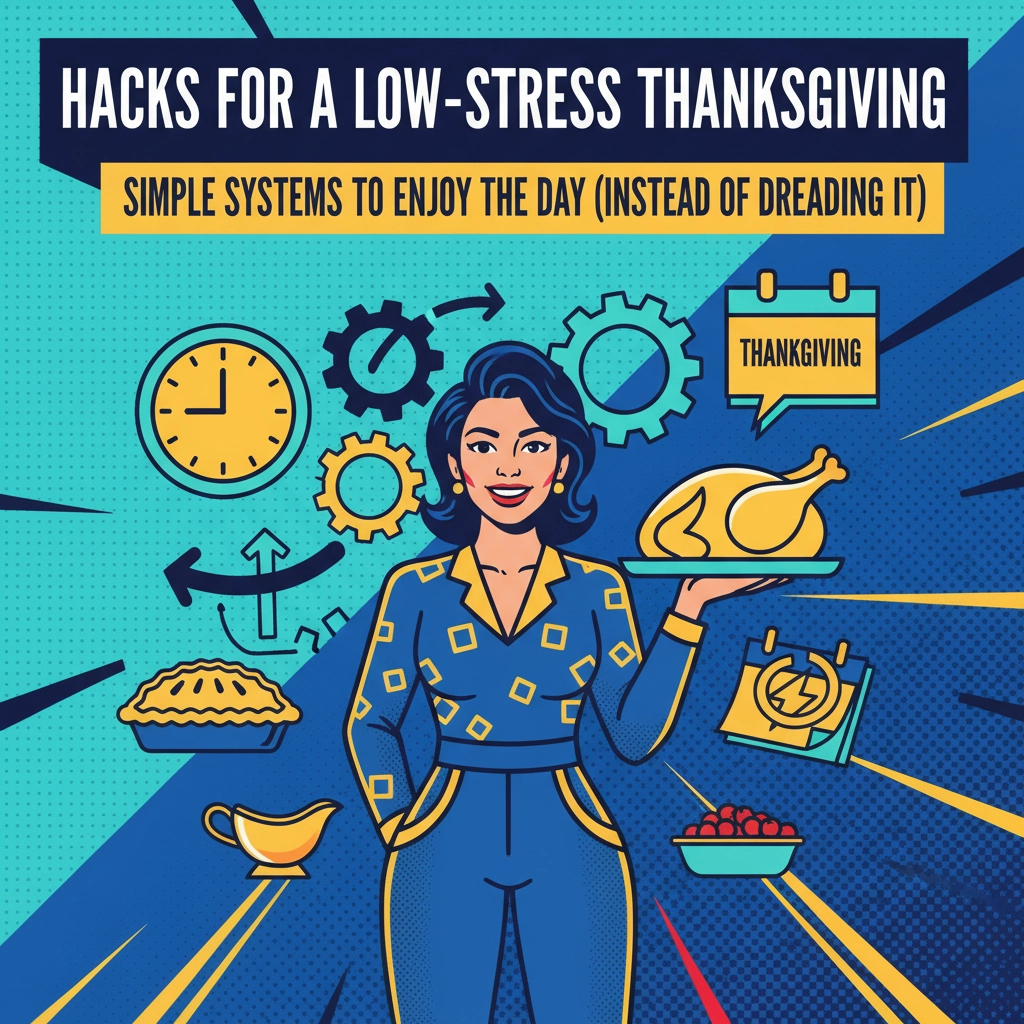
Thanksgiving doesn’t have to be a stress marathon disguised as a holiday. You know the drill: three days of prep, twelve hours of cooking, twenty minutes of eating, and two hours of cleanup while everyone else watches football. Then you collapse on the couch wondering why you signed up for this again.
The real problem isn’t the turkey or the timing. It’s that most people approach Thanksgiving like it’s a military operation without the strategy, delegation, or clear mission objectives that actually make operations successful. You’re trying to control every detail while managing competing priorities, unrealistic expectations, and your own emotional state.
Here’s what actually works: systems that distribute the load, protect your mental bandwidth, and keep you present for what matters. These aren’t generic holiday tips. They’re practical frameworks designed for people who understand that stress management is a skill, not an accident.
The Planning Framework That Actually Works
Your stress level on Thanksgiving Thursday is determined by decisions you make today. Event planners this “prior planning prevents poor performance,” and it applies perfectly to holiday hosting.
Start with a comprehensive inventory. Write down every single dish, every side, every detail you’re planning. Then ask yourself the most important question: what would happen if I cut this list in half? Most people pack their Thanksgiving menu like they’re feeding a battalion for a month. You’re hosting dinner, not opening a restaurant.

Create a reverse timeline from Thursday afternoon backward. Turkey needs to thaw for 24 hours per 4-5 pounds. Pie crusts can be made three days ahead. Cranberry sauce keeps for a week. When you map out what can be done when, you discover that 60% of your Thanksgiving work can happen before Thursday morning.
This isn’t about being rigid. It’s about creating structure so you have the mental space to be flexible when things inevitably don’t go according to plan. The human brain can only juggle about four complex tasks simultaneously before cognitive overload kicks in. Planning in advance keeps you within that limit.
The Delegation Principle Every Leader Knows
If you’re doing everything yourself, you’re not hosting Thanksgiving. You’re performing Thanksgiving while everyone else watches. That’s not hospitality. That’s martyrdom with stuffing.
Delegation isn’t about burdening people. It’s about creating ownership and connection. When your brother-in-law brings his famous green bean casserole, he’s not just contributing food. He’s investing in the success of the gathering. People want to help. They just need clear direction.
Give specific assignments with clear parameters. “Can you bring a side dish?” creates decision fatigue and uncertainty. “Can you bring roasted vegetables for eight people, ready to serve by 3 PM?” gives someone everything they need to succeed.
The most successful leaders understand that delegation is about matching tasks to people’s strengths and availability. Your sister who works 60-hour weeks doesn’t need to make homemade rolls. She can pick up excellent ones from the bakery. Your teenage nephew who loves cooking can handle the mashed potatoes from scratch.
Managing the Mental Game
Thanksgiving stress isn’t really about food. It’s about expectations colliding with reality while your nervous system treats every minor setback like a crisis.
Your brain doesn’t distinguish between a burnt pie and a legitimate emergency. Both trigger the same fight-or-flight response that floods your system with cortisol and makes you snap at people you actually love. Understanding this gives you power over it.
When you feel stress building, use the 4-7-8 breathing technique. Inhale for four counts, hold for seven, exhale for eight. This isn’t meditation fluff. It’s a physiological reset that activates your parasympathetic nervous system and tells your brain the emergency is over.

Set boundaries with your own perfectionism. The perfect Thanksgiving exists only in your imagination, and chasing it guarantees misery. Define “good enough” before you start cooking, not after you’ve already spiraled into anxiety about whether the gravy is too thick.
This applies especially to veterans and first responders reading this. Your training taught you to prepare for every contingency and execute flawlessly under pressure. Those skills serve you well in life-or-death situations. They can sabotage you at Thanksgiving if you’re not careful. Holiday hosting isn’t a mission. It’s a gathering. Different rules apply.
Systems for the Day Itself
Thursday morning sets the tone for everything that follows. Start with a clear mind rather than a racing one. Get up 30 minutes earlier than you think you need. Drink coffee in peace. Review your timeline without rushing.
Create environmental cues that support calm focus. Set the table Wednesday night. Prep your cooking playlist in advance, music that energizes you without overwhelming your nervous system. Lay out all your cooking tools and ingredients the night before so you’re not hunting for measuring cups while managing three different cooking timers.
Use the professional kitchen principle of “clean as you go.” Every time you finish with a cutting board, wash it immediately. Wipe spills right away. This prevents the visual chaos that contributes to mental chaos and keeps you from facing a disaster zone when the guests arrive.
Build buffer time into every part of your schedule. If you think the turkey needs four hours, plan for five. If guests are coming at 2 PM, aim to be ready by 1:30. Margin isn’t wasted time. It’s insurance against stress.

The Psychology of Presence Over Performance
The most important shift you can make is understanding what Thanksgiving is actually for. It’s not about proving your worth through perfect execution. It’s about creating space for gratitude and connection.
Your guests don’t need you to be invisible in the kitchen. They need you to be present at the table. Every minute you spend obsessing over whether the stuffing is seasoned correctly is a minute you miss actually connecting with people you care about.
Research on memory formation shows that people remember how they felt more than what they ate. Twenty years from now, no one will remember if your mashed potatoes were slightly lumpy. They’ll remember if you were stressed and anxious or calm and present.
This is especially crucial if you’re managing your own grief, trauma, or major life transitions. The holidays can amplify difficult emotions, making it even more important to focus on what you can control while accepting what you cannot. Your mental health matters more than perfect timing.
Emergency Protocols for When Things Go Wrong
Something will go wrong. The oven temperature will be off. Someone will be late. A dish won’t turn out as planned. How you respond to these inevitable setbacks determines whether Thanksgiving becomes a disaster story or a funny memory.
Have backup plans that require minimal effort. Keep a frozen pie in your freezer. Know which local stores stay open on Thursday morning. Identify at least two dishes that you can eliminate without affecting the overall meal if timing gets tight.
When something goes sideways, pause before reacting. Take three deep breaths. Ask yourself: “Will this matter in five years?” If the answer is no, adjust and move forward. Your emotional state is contagious. If you stay calm, everyone else will too.
Remember that most “disasters” are invisible to your guests. They don’t know what you planned to serve. They only see what you actually serve. A store-bought dessert presented with confidence looks intentional. A homemade disaster served with apologies looks like failure.
The Long Game Mindset
The most successful approach to Thanksgiving is treating it like a skill that improves with practice rather than a performance that must be perfect immediately. Each year, identify one or two things to optimize rather than overhauling everything at once.
Keep notes on what worked and what didn’t. How long did the turkey actually take? Which dishes were worth the effort and which weren’t? What made people light up and what fell flat? This data becomes your personal Thanksgiving playbook.
Build traditions around simplicity rather than complexity. The most memorable holidays often feature the simplest elements: meaningful conversations, shared laughter, stories that get better each time they’re told. These happen more easily when you’re not exhausted from proving your culinary prowess.

Your Thanksgiving, Your Rules
Here’s the truth that no one talks about: you get to decide what Thanksgiving looks like in your home. If the traditional menu doesn’t work for your family, change it. If hosting 20 people feels overwhelming, scale down. If certain relatives create drama, adjust the guest list.
This isn’t about being selfish. It’s about being intentional. You can’t create a meaningful experience for others if you’re drowning in stress and resentment. Taking care of your own well-being isn’t a luxury. It’s a prerequisite for genuine hospitality.
The goal isn’t to eliminate all stress from Thanksgiving. Some pressure and excitement is normal and even energizing. The goal is to keep stress within a manageable range so you can actually enjoy the holiday you worked so hard to create.
Start implementing these systems now, not on Thursday morning. Your future self: and your family: will thank you for approaching Thanksgiving like the strategic operation it really is, executed with the calm confidence that comes from proper preparation and realistic expectations.
The holiday is supposed to serve you and your relationships, not the other way around. Make it work for your life, not against it.