
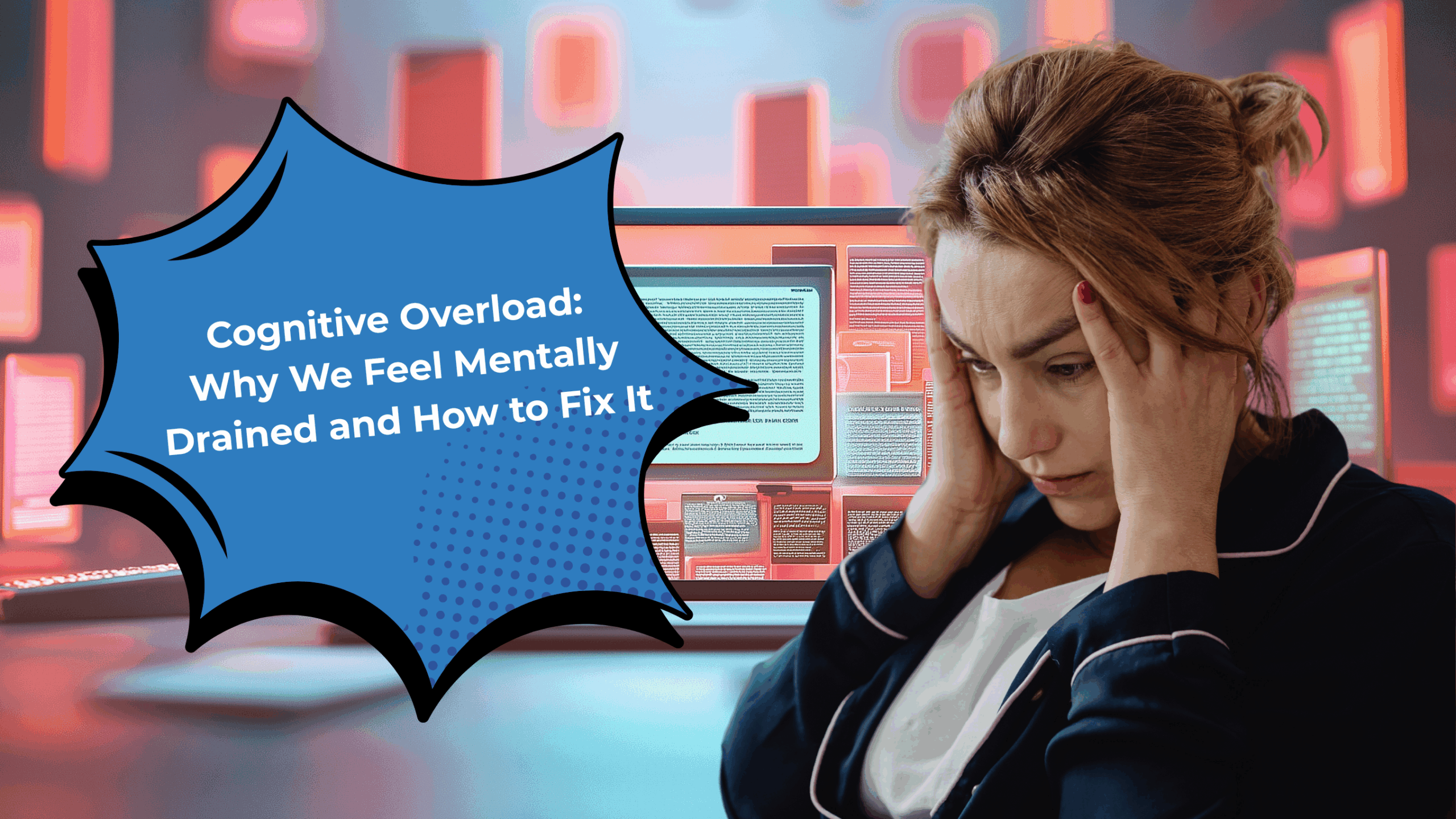
There are days when your mind feels like it is buffering. Too many tabs are open, too many voices are competing for attention, and too little energy remains to finish even simple tasks. You are not broken. You are overloaded. In a world that rewards multitasking and constant connectivity, cognitive overload has become a quiet epidemic. The human brain now processes more information in a single day than people a century ago handled in an entire month. Although the modern mind is adaptable, it is not limitless. Mental fatigue is not a sign of weakness. It is what happens when the brain’s processing systems reach capacity, and no one ever taught us where that limit is.
The Mechanics of Mental Fatigue
The brain is a small organ with massive energy demands. It makes up about two percent of your body weight but consumes about twenty percent of its energy every day. That energy supports focus, decision-making, memory, and emotion. When you juggle multiple tasks, switch between screens, or constantly respond to notifications, the prefrontal cortex—the part of the brain responsible for planning and control—uses energy faster than it can be restored. The result is cognitive fatigue, a condition where clarity, creativity, and motivation begin to collapse. You start to reread the same sentence without comprehension. You open your phone and forget why. Small choices suddenly feel heavy. This is not laziness; it is biology. The system is simply overworked.
Decision Fatigue: The Hidden Drain
Every choice consumes mental energy. Psychologists call this decision fatigue, and it is one of the main causes of burnout.
Research at Columbia University found that judges were more likely to deny parole later in the day than in the morning. It was not bias; it was exhaustion from constant decision-making. Your brain works the same way. By the afternoon, you are less likely to choose the healthy meal, send the thoughtful message, or start the difficult project. When mental resources are low, the brain defaults to the easiest path. High performers prevent this by simplifying choices. Steve Jobs famously wore the same outfit each day. Pilots use checklists. Soldiers rely on routine. The less energy spent on small decisions, the more energy remains for meaningful work.
Digital Distraction and the Cost of Constant Input
The brain is not built for endless novelty. Every time your phone buzzes, the brain releases dopamine, the chemical of reward and anticipation. That tiny burst of stimulation conditions you to check repeatedly, even when nothing important awaits. This cycle fragments focus. A study at the University of California found that after a single interruption, workers took an average of twenty-three minutes to fully regain focus. Even ignoring a notification consumes mental energy. Over the course of a day, hundreds of small distractions can leave you mentally exhausted without realizing why. Multitasking only amplifies the problem. The brain cannot truly perform two complex tasks at once. It switches rapidly between them, losing a little efficiency each time. The more you switch, the more cognitive energy you spend just recovering from the switch itself.
How the Brain Prioritizes Tasks
Inside the brain is a system called the reticular activating system, or RAS. It acts as a filter, deciding which information deserves your attention. The RAS evolved to help early humans notice danger while ignoring harmless noise. Today, that same filter faces an impossible workload. News headlines, advertisements, conversations, and notifications all compete for attention. Without conscious management, the brain spends energy on the loudest signals instead of the most important ones. This is why you can feel busy all day yet still unproductive. The brain’s bandwidth has been spent on noise rather than purpose.
Reclaiming Focus and Clarity
You do not need to escape modern life to protect your mind. You only need to manage it intentionally. The following practices are supported by research and help restore cognitive strength.
Create structure.
- Establish predictable routines in the morning and evening. Reducing uncertainty conserves mental energy for creativity and complex problem solving.
- Batch similar decisions.
- Handle emails, calls, or errands in blocks of time. Focused work followed by rest allows the brain to recover between efforts.
- Simplify your environment.
- Turn off unnecessary alerts and close unused tabs. A calm environment supports a calm mind.
- Take real breaks. The brain’s focus cycles last about ninety minutes. Step away briefly, walk, or breathe deeply before returning to work.
- Practice single-tasking.
- Give full attention to one task. Completing something fully provides a mental reward that improves motivation and confidence.
- Protect your mornings.
- Avoid starting the day in reaction mode. Focus on planning, reading, or problem solving before checking messages.
- Support your brain physically.
- Hydrate regularly, eat nutrient-rich foods, and maintain consistent sleep. Fatigue is often the body asking for maintenance, not motivation.
- Reflect at day’s end.
- Acknowledge what you accomplished before sleep. This reduces anxiety and trains the brain to recognize closure.
The Mental Reset
Clarity does not come from doing more. It comes from filtering better. Productive minds are not those that think constantly; they are those that think deliberately. When you decide what deserves your attention, you give your brain space to process deeply rather than react quickly. The next time you feel mentally drained, pause and ask: What is my mind working on right now? If the answer is scattered, realign. The brain is resilient. It can adapt, recover, and learn new focus patterns at any age. Cognitive overload is not permanent. It is simply the brain’s way of asking for order, rhythm, and rest. When you give it that, the fog lifts. You think clearer, decide faster, and move through life with calm precision. The world does not slow down, but your mind finally learns how to.